
Winter freezes split pipes in north Georgia houses, and the water shows up when the ice thaws. After a frozen or burst pipe the order matters: shut off the water, call a plumber to repair the line, then call us to extract the water and dry the structure.
Before the next cold night: use the frozen and burst pipe checklist. It has a before-the-freeze list, a frozen-pipe list and a burst-pipe list, and you can print it.
On Christmas Eve 2022 the Atlanta airport dropped to 8°F, the coldest the city had been since January 2014, after three days of sub-freezing weather. Cobb County reported hundreds of homes and businesses with water damage from burst pipes. The pattern was the same everywhere: the pipe split during the cold, nobody knew, and the water came when it warmed up.
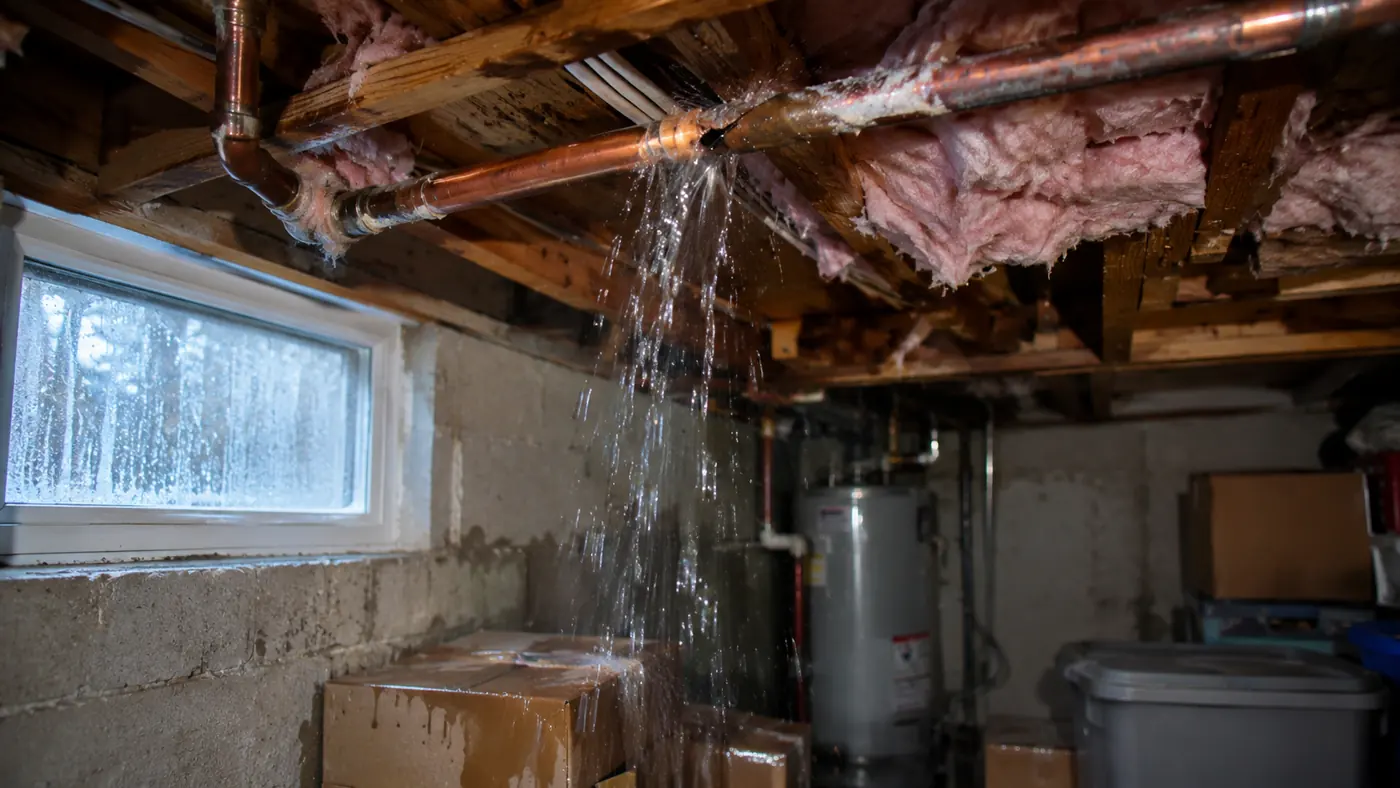
Winter water damage restoration services in Kennesaw, GA
Burst Pipe Water Extraction
Pumps and extractors remove the water from floors, carpet and crawlspaces after a thaw.
Structural Drying
Air movers and dehumidifiers dry walls, subfloors and framing, with heat added in cold spaces.
Flooded Basement Cleanup
Water out, wet drywall and carpet removed, the basement dried and checked.
Crawlspace Water Removal
Standing water and wet insulation cleared from under the house.
Ceiling & Drywall Water Damage
Wet ceilings and walls from a split line opened, dried and repaired.
Mold Prevention and Removal
Drying and checks that stop growth, and removal when wet material sat too long.
Kennesaw's freeze season at a glance
From November through March the average coldest night of the month at the Atlanta airport is below freezing. These are the months to protect pipes.
Figure shown is the average of each month's coldest reading, 1991–2020. A single night can still freeze a pipe in a month that averages above 32°F.
Sources: NOAA 1991–2020 normals, Hartsfield-Jackson station, as tabulated on Wikipedia.
From a cold night to a flooded basement
This is why a burst pipe is usually found after the freeze, not during it.
Why north Georgia houses freeze when they should not
Many houses here were built for mild winters. Water lines run through vented crawlspaces, exterior walls, garages and attics, where they get little protection when temperatures drop. Hose bibs freeze if hoses stay connected. A line in an uninsulated exterior wall can freeze on a night that does not look all that cold. When it freezes, the ice expands and splits the pipe, but the water inside is frozen too, so nothing leaks until it thaws.
How cold the coldest night gets, month by month
Each bar is the average of the coldest reading in that month, 1991–2020, at the Atlanta airport. The two black lines mark 32°F, where water freezes, and 20°F, where we start getting calls for lines in vented crawlspaces. A bar that stops short of a line means the average month gets that cold at least once. January's average coldest night is 17.3°F, below both lines.
This is the average coldest reading of each month, not a count of freezing days. We could not find a published monthly count of nights at or below 32°F or 20°F for the Atlanta station, so we are not showing one. The record lows are 0°F (December), −8°F (January) and −9°F (February).
Sources: NOAA 1991–2020 normals, Hartsfield-Jackson station, as tabulated on Wikipedia.
What to do on a freezing night
These steps cost nothing and take a few minutes. Do them when the forecast drops toward freezing, not after the pipes stop running.
Keep the heat on
Leave the thermostat on and steady, day and night. A cold house with the heat set far down is how interior walls get cold enough to freeze a line.
Let a faucet drip
A thin, steady drip on the lines that run through exterior walls or the crawlspace keeps water moving. Use the faucet farthest from where the water enters.
Open the cabinet doors
Sink cabinets on exterior walls trap cold air against the pipes. Open the doors so room heat reaches them.
Unhook the hoses
Disconnect garden hoses and cover the hose bibs. A connected hose holds water against the faucet and can split the line behind the wall.
Close up the openings
Close the garage door and cover crawlspace vents for the cold snap. Pipe insulation helps most on lines you can reach.
Know your shutoff
Find the main valve in daylight, before you need it. Everyone in the house should know where it is.
Winter pipe protection by location
| Where | Why it freezes | What helps |
|---|---|---|
| Vented crawlspace | Vents let in cold air, and pipes are often uninsulated or insulated only on top | Vent covers for the cold snap, pipe insulation, heat tape rated for plumbing |
| Exterior wall | Little insulation between the pipe and outdoor air | Open the cabinet doors, let a faucet drip, add insulation when the wall is open |
| Attic | Lines or the water heater supply near the roof deck | Insulate over, not under, the pipe, and keep the attic access closed |
| Garage | Often unheated, and the door lets in wind | Keep the door closed, insulate exposed lines |
| Hose bib | Water sits in the spigot and in the line behind it | Unhook hoses, cover the bib, shut off an interior valve if there is one |
| Empty or vacant house | No heat and no one to notice | Keep the heat on, or shut off the main and drain the lines before you leave |
What happens when the pipe thaws
The leak starts when the ice melts, often on the first warmer morning or while you are away. A small split can run for hours before anyone notices, and a larger break can fill a basement quickly. If you lose water pressure during a cold night, treat it as a frozen pipe and check for splits before the temperature rises.
Where to shut off the water
Know this before you need it. The main shutoff is usually where the line enters the house: in the crawlspace, garage, or a utility room, or in a box at the street, called the meter box, which usually needs a meter key. Turn the valve clockwise until it stops. If you cannot find or turn it, call your water utility. Then open a faucet at the lowest point of the house to drain the lines.
Choose this when
- A pipe split in a wall, crawlspace, attic or garage.
- Water in a basement or crawlspace after a freeze.
- Wet drywall or a stained ceiling after a thaw.
Not the right fit
- A pipe that is frozen but has not split: thaw it safely and see the checklist.
- A leak with no freeze: water damage restoration.
- You need the pipe repaired: that is a plumber.
Frozen pipe burst cleanup with the plumber first
- Shut off the main water.
- Turn off power to wet areas if you can reach the breaker dry.
- Call a plumber to repair the broken line, or at least to cap it.
- Take photos for insurance.
- Call us. We can start extraction and drying while the plumber works or right after. If water is still flowing, nothing we do will hold.
Pipe burst in a wall
A split inside a wall soaks drywall and insulation, and the water can run down to the bottom plate and subfloor. We find the wet area with meters and a thermal camera, then flood cut the wall at a height above the wet line, usually two feet, and often higher if water wicked up. Removing the drywall and insulation lets us dry the framing quickly. The plumber will usually need access to the pipe anyway.
Burst pipe flooded basement and crawlspace
Basements fill quickly because the water has nowhere to go. We pump, extract carpet, cut wet drywall, and set drying. Crawlspaces are quieter and worse: a burst line can run for days in a space no one visits. On Kennesaw's red clay, the water does not drain away, so we pump, remove wet insulation, and dry the dirt surface and the air. The floor above is checked for moisture and cupping.
Why winter drying is different
Cold air holds little moisture, and a cold basement or crawlspace dries slowly. Equipment that works well in a warm room can struggle in a cold one, so we add heat where we can and use dehumidifiers suited to cool spaces. We keep the heat in the house on while we dry, and we take readings each visit instead of trusting how the room feels. Skipping that step is how a winter loss turns into a spring mold call.
If the pipe burst while you were away
A split that runs for days in an empty house soaks far more than one caught in an hour. If you come home to water, shut off the main before you walk through it, keep out of rooms where water is near outlets or the panel, and take photos from a dry spot. Call the plumber and call us. Water that has run for days can reach the ceiling below and the subfloor, so the sooner drying starts the more of the house you keep. See mold removal if the water sat for more than a couple of days.
Frozen pipes in the crawl space
Crawlspace lines freeze because vents let in cold air and the pipes are uninsulated or insulated only on top. Foundation vent covers, pipe insulation and heat tape rated for plumbing are common fixes, and the checklist walks through them. Never use an open flame to thaw a line. A hair dryer or warm towels on an exposed pipe are safer, with the faucet open so water can flow once it thaws.
Insurance and sudden bursts versus long-term leaks
Many homeowners policies cover water damage from a sudden burst and exclude damage from a slow leak that went on for weeks, so the difference matters. Document the date you found it, keep the broken pipe section if the plumber removes it, and take photos before cleanup. Coverage is your insurer's decision. We provide moisture logs and photos.
Why Kennesaw freezes catch houses off guard
Houses here go years without a hard freeze, then get a night like December 2022 or January 1985, when the airport reached −8°F. Because freezes are rare, pipe protection is often neglected, and crews are in demand all at once. The same thaw that frees one pipe frees many, across the whole area, so call early.
Sources: Atlanta News First, Dec. 24, 2022; GPB, Dec. 27, 2022; Atlanta climate and extremes.
Burst pipe water damage cost
| Scope | Planning range, mitigation only |
|---|---|
| 600 sq ft basement, clean water, found within the first day, carpet out, drywall cut over 2 ft | $3,700–$8,300 |
| 1,000 sq ft crawlspace, found after 1–3 days, wet insulation out | $4,650–$12,600 |
| The plumber's repair | Priced by the plumber |
Planning ranges, not a quote. A written scope after an on-site look is the only real number. Call (678) 940-0778. The calculator will adjust for your area.
Sources: Angi; Fixr; HomeAdvisor.
Burst pipe questions
Should I call you or the plumber first?
The plumber for the repair, us for the water. If the line is still flowing, shut off the main and call both.
How do I thaw a frozen pipe?
Open the faucet, apply gentle heat with a hair dryer or warm towels, and start at the faucet end. Never use a flame. The checklist covers this.
Should I let faucets drip when it freezes?
Yes, on lines that run through exterior walls, crawlspaces or garages. A thin, steady drip keeps water moving. It will not protect a line that is fully exposed to wind, so insulate those.
My water stopped during a cold night. What now?
Assume a frozen pipe. Open the faucet, find the cold section, warm it gently, and check for splits before it thaws. If water appears, shut off the main.
Do I need to leave the house?
Not usually, but you may want to if the heat is off or drying equipment is loud.
Can drywall be dried instead of cut?
Sometimes, if the water was clean and the exposure short. Meters decide.
Will the pipe burst again?
A repaired line can hold, but the cause stays. If the pipe froze once, insulate it or move it out of the cold space.
Related services
- Frozen & Burst Pipe Checklist
- Crawlspace Water Removal
- Flooded Basement Cleanup
- Burst pipes in Fair Oaks, GA
Water on the floor right now? Call us. (678) 940-0778