
Sewage backup cleanup removes contaminated water and the materials it touched, then disinfects and dries the space. Sewage is category 3 water, the most contaminated class. Stay out of it, keep children and pets away, and call quickly.
Sewage water is category 3 by the industry's own definition, meaning it is grossly contaminated and can carry bacteria and other harmful agents. That label drives every decision on the job: what we wear, what we remove, and what we will not try to save. It is also why this is not a weekend project.
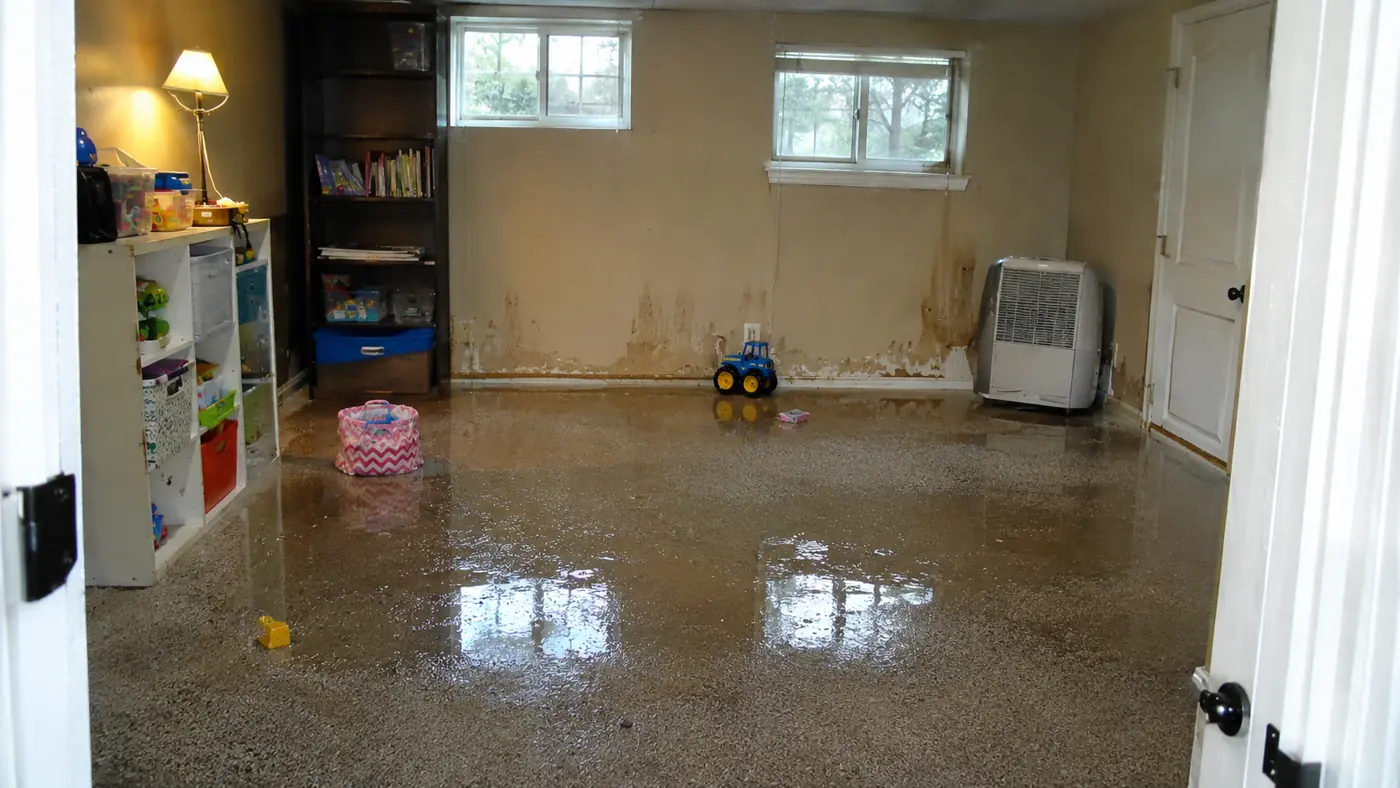
Sewer backup in the basement
Sewer water enters a basement through the lowest drain, usually a floor drain, a laundry standpipe, a basement bathroom or a toilet. It happens when the main line is blocked or the public sewer backs up after heavy rain. If more than one fixture is gurgling or backing up, the problem is probably the main line, not one drain. A plumber has to clear it, and we handle the cleanup. Do not use the plumbing until it is cleared.
Toilet overflow cleanup
A toilet overflow with only clear water from the tank or supply is category 1. An overflow with waste in it is category 3. The distinction decides whether carpet can be dried or has to go, so tell us what was in the water. On a hard floor with a small amount of waste, cleanup and disinfection may be enough. On carpet or subfloor, removal is the norm.
Choose this when
- Water from a toilet, floor drain or sewer line.
- A main line backup into a basement or lower level.
- Flood water that has mixed with sewage or yard runoff.
Not the right fit
- Clean supply water: water damage restoration.
- Rain through a door or window: storm and flash flood cleanup.
- Rural septic problems: call a septic company first.
What we do in category 3 water cleanup
- Put on protective gear: gloves, boots, eye protection and respirators where needed.
- Extract the contaminated water with a pump or extractor.
- Remove porous materials the water touched: carpet, pad, drywall to a safe height, insulation, and particleboard.
- Clean surfaces and apply a disinfectant that is appropriate for the material.
- Dry the structure with air movers and dehumidifiers, with HEPA air scrubbers if the space needs air cleaning.
- Check moisture and give you the readings and a scope for the repairs, which we can do.
Clean vs gray vs black water
| Clean (category 1) | Gray (category 2) | Black (category 3) | |
|---|---|---|---|
| Source | Supply line, rainwater early on | Washer, dishwasher, sump overflow | Sewage, creek or river flood water |
| Carpet and pad | Pad out, carpet often kept | Pad out, carpet case by case | Both removed |
| Drywall | Dried or cut low | Cut if wicked high or sat | Cut and removed |
| Who should handle it | Homeowner can start, then call | Crew recommended | Crew only |
| Planning range, mitigation only | $3.00–$5.00 per sq ft | $4.00–$7.00 per sq ft | $7.00–$12.00 per sq ft |
Main line backup cleanup
After a plumber clears the main line, the backup may have flowed through several rooms. We follow it, starting at the lowest drain and mapping the water as it spread. Often the least obvious part is the subfloor and wall bottoms, because contaminated water wicks into them like a sponge. Our meters and thermal camera help find that, and so does the smell.
Heavy rain and Kennesaw sewer lines
Heavy rain can push a sewer to its limit, and older, shallower lines are more likely to back up. Houses on slopes with a basement bathroom below the street level of the sewer are most at risk, because a backup finds the lowest fixture first. Houses with a backwater valve on the main line are protected. If you do not know whether yours has one, a plumber can check. Houses on septic outside the sewer service area, have a different problem and a different first call: the septic company.
The three kinds of water, and what happens to your materials
The category decides what can be dried in place and what has to go. It is the first thing we work out.
What to do before we arrive
- Keep people and pets out of the water. Wash hands well after any contact.
- Do not run the washing machine or flush toilets if the line is backing up.
- Do not try to dry the area with fans. Fans spread contamination.
- Do not use a household vacuum on sewage water.
- Turn off power to wet areas only from a dry spot.
Sewage backup cleanup cost
Published guides put sewage mitigation at about $7 to $7.50 per square foot, and note that sewage cleanup often costs two to three times what clean water does for the same area. Our planning range is $7 to $12, because disposal and protective work add cost.
| Scope | Planning range, mitigation only |
|---|---|
| 250 sq ft finished basement, sewage, found within the first day, carpet out, drywall cut under 2 ft | $2,450–$5,400 |
| Single bathroom floor, hard surface, small amount | Quoted after a look |
Planning ranges, not a quote. A written scope after an on-site look is the only real number. Call (678) 940-0778. The calculator has a black-water option.
Sources: Angi; Fixr; HomeAdvisor.
Sewage backup questions
Can I clean it myself?
A tiny amount on a hard surface, with gloves and boots and a disinfectant, may be manageable. Anything on carpet, drywall or a large area should be left to a crew.
Does insurance cover it?
Many policies cover sewer backup only with an added endorsement. Ask your agent before you need it, and call right away if you already do.
What happens to my belongings?
Hard items can be cleaned. Porous items such as upholstered furniture, cardboard and rugs usually cannot.
Should I stay in the house?
Stay out of the affected area. If the backup reached living areas or you have young children or health concerns, ask your doctor and arrange somewhere else to stay.
Related services
Water on the floor right now? Call us. (678) 940-0778