Key takeaways
- Red clay drains slowly, so water sits against the foundation and collects in the crawlspace.
- Find the source before pumping. Rain, plumbing leaks, ground water and humidity each need a different fix.
- Not all crawlspace moisture is liquid. In humid weather, condensation alone can leave joists wet.
- Do not enter a crawlspace with standing water and live wiring. Turn off the breaker from a dry spot first.
- Remediation cleans and dries. Encapsulation seals. They are different jobs, and sealing comes after the water is solved.
- Downspouts, gutters and grading are the cheapest fixes and often the most effective.
A wet crawlspace is one of the most common and most misunderstood water problems in Georgia houses. People often learn about it from a musty smell in the hall, a cupped hardwood floor, or a contractor who noticed standing water while looking at something else. By then the water has usually been there a while.
This guide explains how a crawlspace works, why crawlspaces on Georgia red clay hold water, the five sources of crawlspace water, how to inspect one safely, what the cleanup involves, which fixes stop it coming back, and what the common fixes cost. It is meant to be complete enough that nothing else needs reading before a decision.
How a crawlspace is built
A crawlspace is the low area between the ground and the floor of a house, usually 18 inches to a few feet high, with a dirt or thin concrete floor. It lets plumbing, wiring and ducts run under the house, and it keeps the wood floor structure above the soil. Two designs are common.
| Design | How it works | Typical weakness |
|---|---|---|
| Vented crawlspace | Openings in the foundation wall let outside air move through the space | In humid summers the air brought in is wet, and in winter it is cold enough to freeze pipes |
| Sealed or conditioned crawlspace | Vents are closed, the floor and walls are covered with a vapor barrier, and the space gets some conditioned air or a dehumidifier | It depends on the barrier staying intact and the drainage working |
Many older houses around Kennesaw have vented crawlspaces. Some owners later seal them. Neither design stops water from a leak or from poor drainage around the house, and both need the ground around the foundation to shed water.
Why Kennesaw crawlspaces hold water
Kennesaw sits in the Piedmont, where the common soils have a clayey, reddish subsoil formed from rock weathered in place. The USDA description of the Cecil series, a typical Piedmont soil, lists a subsoil that is 35 to 60 percent clay, with saprolite deep below and bedrock very deep. The mapped soil series for a given address can differ, but the pattern is the same across most of the area: clay drains slowly.
That matters because a crawlspace is a low spot with a dirt floor. When rain saturates the soil around the house, the water has nowhere to go. It sits against the foundation, pushes through seams and vents, and collects on the dirt. A vapor barrier laid over the dirt can trap water on top instead of letting it soak away. Insulation between the joists then absorbs it.
How rain becomes a wet crawlspace on red clay
The same chain shows up in most wet crawlspaces in the area.
The five sources of crawlspace water
Not every wet crawlspace is a rain problem. Working out the source is the whole job, because removing water that keeps returning solves nothing.
Surface water and grading
Rain runs toward the foundation because the ground slopes the wrong way, a downspout dumps next to the wall, or the gutters overflow.
High water table
In some lots and in wet seasons the ground water itself rises to the level of the crawlspace floor.
Plumbing leaks
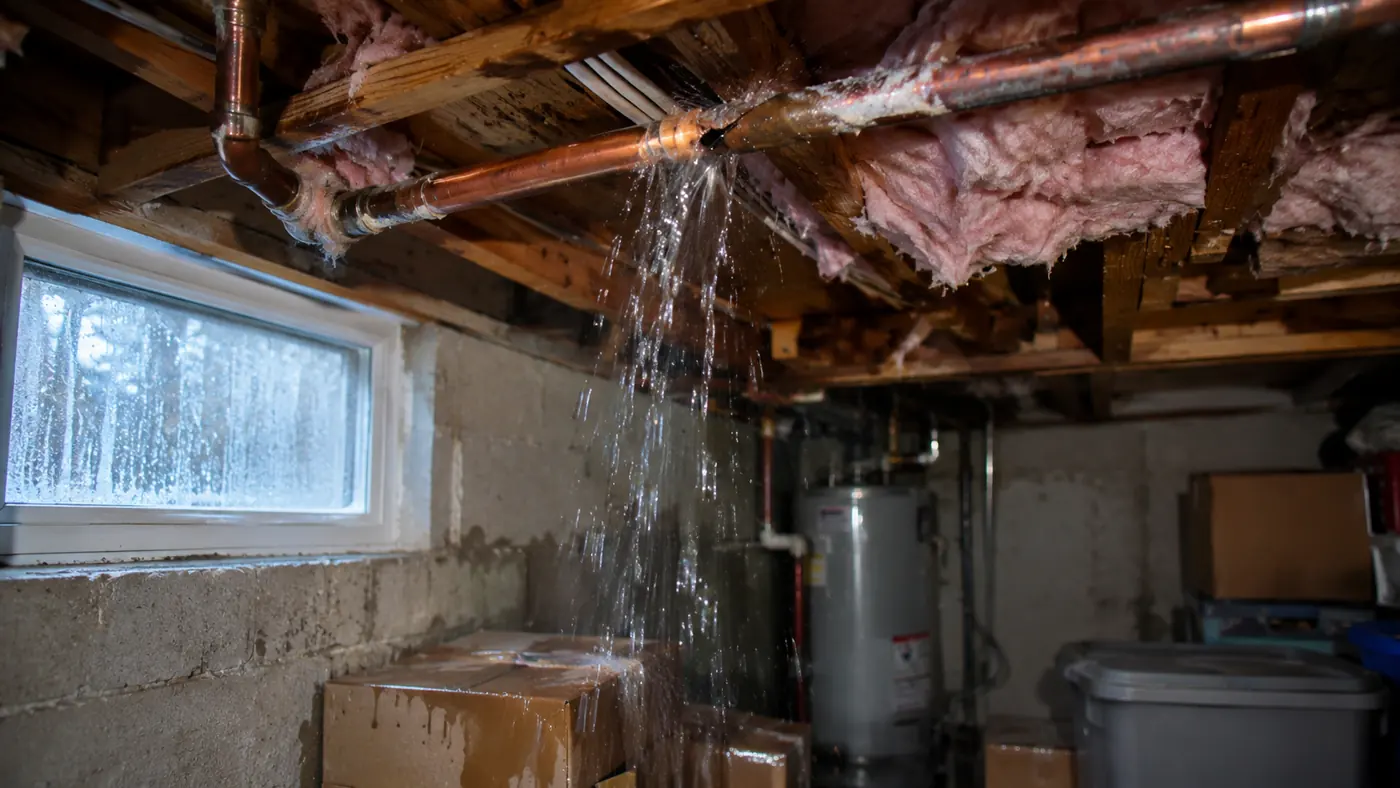
A supply line, drain line or water heater line above or inside the crawlspace drips for weeks. This water is often clean at first.
Condensation and humidity
Warm, humid Georgia air meets cool surfaces and water forms on ducts, pipes and the underside of the floor.
Sump or drainage failure
A pump, a power outage or a clogged discharge line stops removing water that was being handled before.
The humidity side of the problem
Not all crawlspace moisture is liquid water. In a Georgia summer the outdoor air can be warm and very humid. When that air enters a vented crawlspace and touches cooler surfaces, such as a cold-water pipe, an air-conditioning duct or the ground itself, moisture condenses. The result is damp joists, beaded water on ducts and a musty smell with no puddle anywhere. This is why a crawlspace can be wet in July after a dry week.
EPA guidance for homes says to keep indoor humidity below 60 percent, ideally between 30 and 50 percent, and to dry wet material within 24 to 48 hours. A small hygrometer in the crawlspace shows whether it stays above that range for long stretches. Readings that sit high all summer point to a humidity problem even when no leak is present.
Signs of a wet crawlspace
- A musty smell in the house that is strongest near the floor or the hall closet.
- Floors that feel cool, soft or spongy, or hardwood that has started to cup at the edges.
- Insulation sagging, wet or fallen to the ground.
- Visible standing water, mud or water stains on the foundation wall.
- Dark growth on joists or the underside of the subfloor.
- A water bill that jumped with no change in how water is used.
- Doors and windows that start to stick.
- Rust on nails, ducts or metal hangers.
How to inspect a crawlspace safely
A look from the access point tells you a lot. Going all the way in is riskier than it seems.
- Check the electrical first. Crawlspaces often have lights, outlets, a sump pump or duct fans. If there is standing water and live wiring, turn off the breaker from a dry spot, or do not enter.
- Wear protection. Gloves, long sleeves, knee pads, a headlamp and a fitted N95 or better if there is visible growth or dust.
- Look from the opening first. Scan with a flashlight for standing water, wet insulation, sagging, mold and the water line on piers.
- Note the water line. Marks on piers and foundation walls show how high the water got and how often.
- Check the plumbing. Look for drips, wet pipe insulation, rust and green corrosion on copper.
- Photograph everything, with the date.
- Look outside too. Downspout locations, gutters, ground slope and low spots along the foundation matter as much as what is under the house.
If the space is tight, wet and dark, a camera on a pole or a phone lowered through the opening can show most of it without going in.
What to do in the first hour
- Shut off the water at the main if a plumbing leak is possible. If the water meter keeps moving with everything off, there is a leak.
- Turn off power to the crawlspace if there is standing water and wiring, from a dry spot.
- Photograph what is visible from the access point.
- Check outside for downspouts that end at the foundation and gutters that overflow.
- Arrange pump-out and drying. The longer wet insulation and joists stay wet, the more likely mold and rot become.
When the source is clearly a pipe, a plumber repairs the line and a water damage crew handles the water. The page on crawlspace water removal describes how that cleanup is done.
What professional cleanup involves
A crawlspace job follows an order. Each step is there for a reason, and skipping one is how a wet crawlspace becomes a mold problem a few weeks later.
Find the source
Is it rain, a leak or ground water? The answer decides the fix.
Pump the water
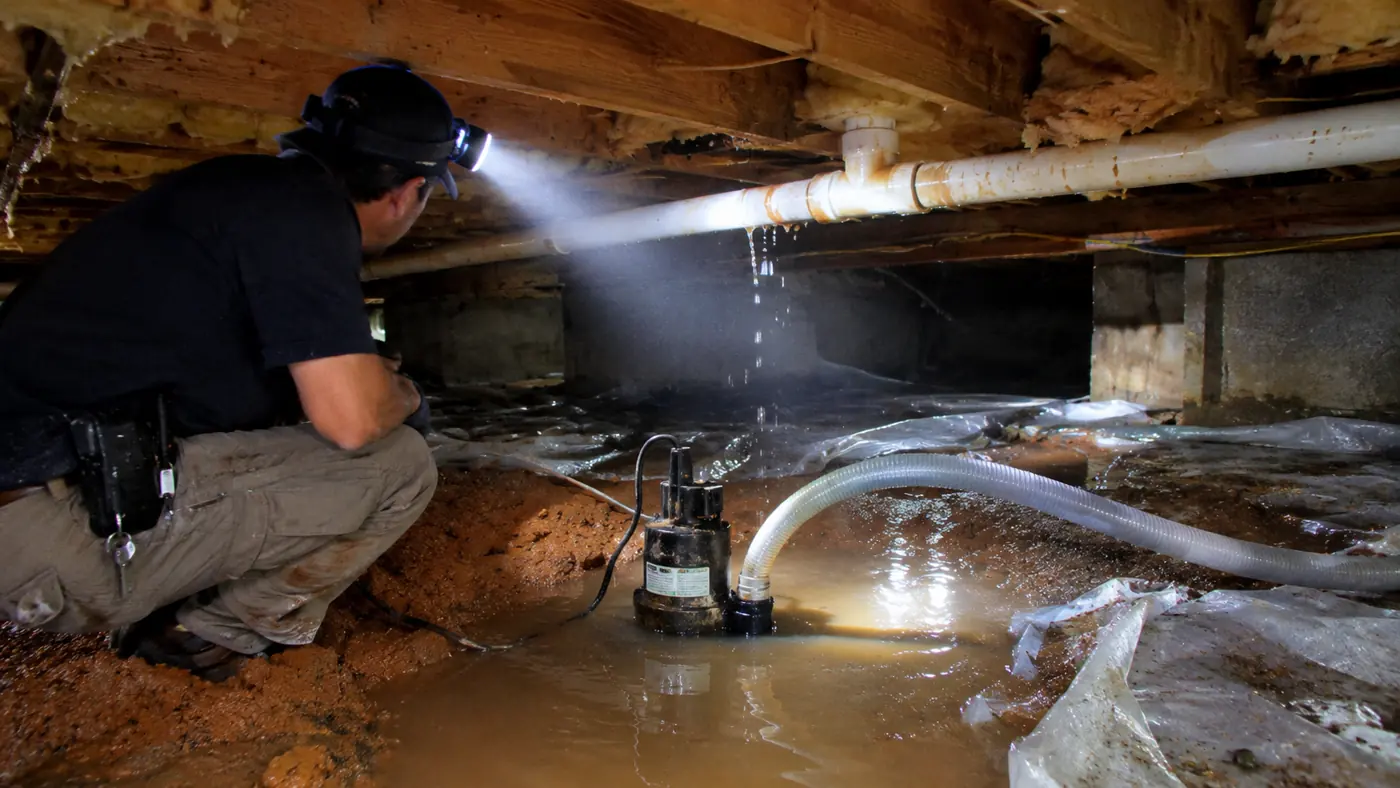
A small pump moves standing water through a hose, away from the house.
Remove wet material
Soaked insulation comes out. Joists and subfloor are checked for moisture.
Dry the space
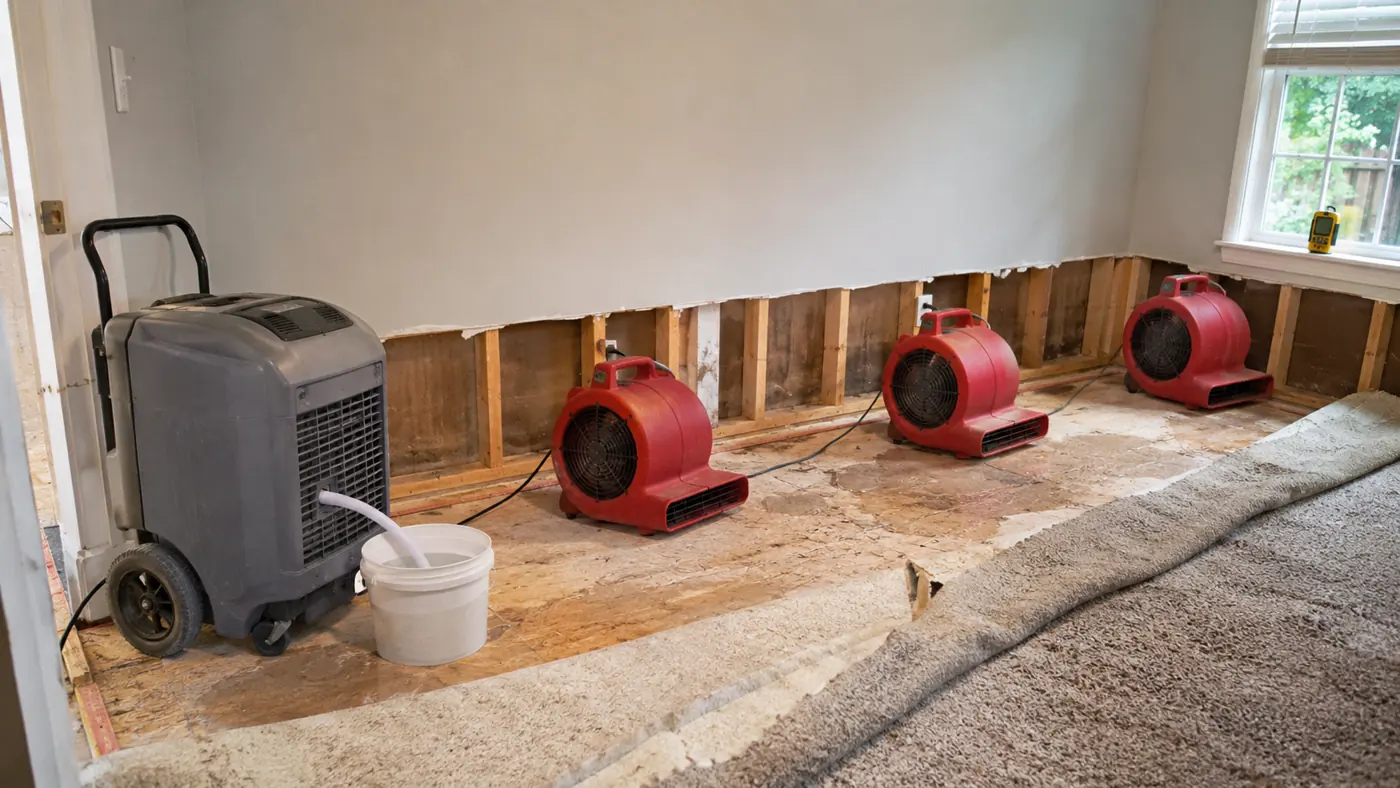
Dehumidifiers and air movers dry the dirt surface, the air and the floor above.
On red clay the water does not drain away, so the dirt surface itself stays wet and has to be dried along with the air. The floor above is checked for moisture and cupping. Crawlspace drying often takes longer than a basement because the soil keeps releasing moisture. The method is explained further under structural drying: the readings, not the calendar, decide when it is finished.
What wet crawlspaces do to the house above
A crawlspace is not isolated from the living space. Air moves up through gaps around pipes, ducts and the floor, a process often called the stack effect. Moisture and odor from below reach the rooms above. Long-term wetness can also affect the structure.
- Floors. Hardwood can cup or buckle, and subfloor panels can swell or soften.
- Framing. Joists and sill plates that stay wet can rot over time.
- Insulation. Wet insulation sags, loses its value and holds water against the floor.
- Ducts. Ductwork in a damp crawlspace can sweat, and damaged duct insulation lets moisture reach the air stream.
- Air quality. Musty air and mold spores can reach the living space through the gaps.
Remediation versus encapsulation
These two words are often used as if they meant the same thing. They do not.
| Remediation | Encapsulation | |
|---|---|---|
| What it does | Removes mold and wet material, cleans and dries the space | Seals the space against moisture with a heavy vapor barrier on floor and walls, sealed vents and usually a dehumidifier |
| When it fits | There is growth or wet material now | The goal is to keep moisture out for the long term |
| Cost guide | About $500 to $2,000 for typical crawlspace mold totals, per published guides | One guide quotes $1,500 to $15,000 depending on size and condition |
| Who does it | A mitigation or remediation crew | Usually a separate encapsulation contractor |
Encapsulation is a decision for after the water problem is solved, not instead of solving it. Sealing a crawlspace over an active leak or a drainage problem locks the moisture in. The mold removal page explains what remediation includes, and the mold removal cost calculator explains the cost factors.
Fixes that stop it coming back
These are in rough order of cost, from cheapest to most involved. Most houses benefit from the first three before anything else.
Extend the downspouts
Run downspouts several feet away from the foundation, onto ground that slopes away. This is often the biggest fix for the least money.
Clean the gutters
A clogged gutter dumps water exactly where it does not belong.
Fix the grading
The soil beside the foundation should slope away from the house. Low spots near the wall need fill and compaction.
Seal and cover openings
Repair foundation cracks and keep vents covered or sealed when the weather is wet or humid, based on a contractor's advice.
Install or repair drainage
A sump pump with a working discharge line, or a perimeter drain, handles ground water that grading alone cannot.
Control the humidity
A crawlspace dehumidifier and a continuous vapor barrier on the floor reduce condensation and humidity.
Drainage, grading and sump installation belong to drainage and foundation contractors. A restoration crew can usually tell what the likely source is from what it finds, but it cannot see a problem it cannot reach.
Deciding what to do
| What you find | Likely cause | Reasonable next step |
|---|---|---|
| Standing water after rain, dry otherwise | Surface water or grading | Pump out, extend downspouts, check grading, then consider drainage |
| Standing water and no rain | Plumbing leak or high water table | Check the water meter, call a plumber, consider a sump |
| Damp, no puddles, musty smell in summer | Humidity and condensation | Cover vents in humid weather, add a vapor barrier and a dehumidifier |
| Wet insulation and sagging | Water has been present for a while | Remove wet insulation, dry the space, find the source |
| Dark growth on joists | Moisture and time | Fix the moisture first, then remediation |
| Water returns after every pump-out | The source is not fixed | Drainage or foundation contractor, not more pumping |
The seasonal pattern
Crawlspace problems follow the calendar in Georgia. Spring brings heavy rain on saturated clay and the highest risk of standing water. Summer brings heat and humidity, so condensation and mold growth become the issue even without rain. Fall is the best time to fix grading and gutters before the next wet season. Winter brings cold air through vents, which can freeze pipes, and a leak during a freeze may not show until the thaw. The guide to burst pipes in a Georgia winter covers that last case.
What a wet crawlspace costs
Crawlspace jobs carry a higher multiplier than open rooms because of tight access. As a planning example, a 1,000 square foot crawlspace with clean water found after one to three days and wet insulation removed runs about $4,650 to $12,600 for the water side. If mold has already grown on joists and insulation, remediation is priced separately at about $10 to $25 per square foot, with typical crawlspace totals of $500 to $2,000 in published guides, and higher for large or severe cases. The guide to water damage restoration cost in Kennesaw shows how those numbers are built.
Mold in a wet crawlspace
Dark growth on crawlspace joists is common in humid parts of Georgia. Color alone does not tell you what kind of mold it is, so it should not be used to diagnose. A crawlspace that stays wet for weeks gives mold what it needs: moisture, food and time. Joists can often be cleaned in place when the wood is sound. Insulation and vapor barriers with growth are removed. Without a moisture fix, growth returns.
Do it yourself or hire help
A small amount of water from a one-time event, in a crawlspace that is easy to reach, can sometimes be handled with a wet vacuum and a fan. Professional help makes sense when any of these is true:
- There is standing water over a large area.
- The water has been there for more than a day or two.
- Insulation is wet or has fallen.
- There is mold, or a persistent musty smell.
- The electrical safety of the space is uncertain.
- It keeps coming back after rain.
In winter a wet crawlspace can also mean a burst line. See the winter burst pipe cleanup page for what that looks like.
Older houses and low clearance
Houses with low clearance, such as many older ones in Fair Oaks and Marietta, are the hardest to work in and the most likely to have been wet a long time. Some have clearance under 18 inches, which makes pumping, insulation removal and drying slower and more expensive. Older houses may also have older plumbing, wood that has been damp for years and past repairs that were never recorded.
The same patterns show up across the nearby towns. Local notes on housing, water and terrain are on the pages for Acworth, Marietta, Woodstock, Fair Oaks, Emerson and Smyrna.
Questions people ask about wet crawlspaces
Is a wet crawlspace dangerous to health?
Standing water and damp insulation can lead to mold, which can bother people with allergies or asthma. Health effects are for a doctor to diagnose. Anyone who is sick should keep out of the work area.
Should the crawlspace vents be closed?
It depends on the weather and the house. Open vents let humid air in during summer and cold air in during a freeze. A contractor who has seen the space should advise before anything is sealed.
Will a dehumidifier solve it?
Only if the water source has been fixed. A dehumidifier controls humidity, not standing water or a leak.
How long does it take to dry a crawlspace?
Often several days, and longer than a basement of the same size, because the dirt keeps releasing moisture. The job ends when moisture readings say dry.
Why does the water keep coming back?
Because the source was not fixed. Pumping removes the water, not the cause. Grading, downspouts, drainage or a plumbing leak is usually the answer.
Is standing water in a crawlspace normal after heavy rain?
It is common on clay soil, but it is not harmless. Water that stays for more than a day or two can soak insulation and start mold. If it happens every storm, the drainage needs attention.
Sources: USDA-NRCS, Cecil series official description; EPA, A Brief Guide to Mold, Moisture and Your Home; This Old House, mold remediation cost; Fixr, mold remediation.
About this guide. Written by the Kennesaw DryOut team for homeowners in Kennesaw and Cobb County, Georgia. It is general information, not professional, legal or insurance advice, and figures are planning ranges, not quotes. Last updated July 15, 2026.